Peliou New Materials Technology Co.,LTD
Ultra-high molecular weight polyethylene (UHMWPE) rod stock is not a commodity item. The molecular weight behind the rod determines whether a bushing lasts one season or five, and the tolerances on the finished diameter determine whether a machined compon
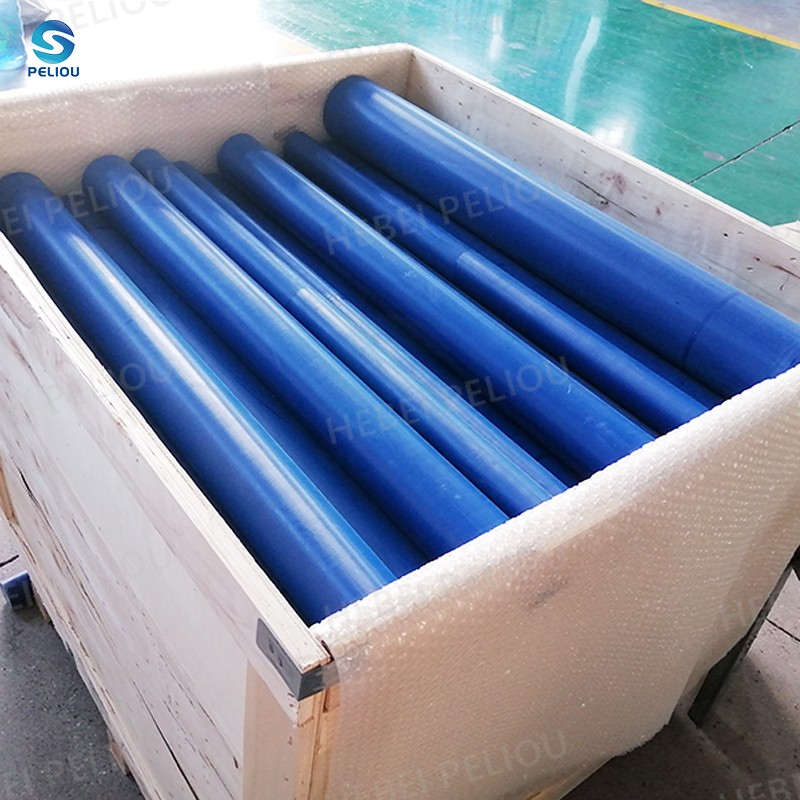
Why UHMWPE Rod Stock Outperforms Metal and Standard Plastics in Wear Duty
UHMWPE’s value in rod form comes from a combination of properties that few competing materials replicate at the same cost point. The polymer’s extremely long molecular chains—typically in the 1.5 million to 12 million g/mol range, versus roughly 20,000–30,000 for ordinary polyethylene—produce exceptional energy absorption and abrasion resistance. Published property data for commercial UHMWPE rod stock cites tensile strength around 5,800 psi, impact strength described as “no break” in notched testing, and a working temperature window extending from −60 °F to 200 °F (−51 °C to 93 °C) in standard grades, with specialized formulations reaching −269 °C to 90 °C for short-term or cryogenic exposure.
In practical terms, a UHMWPE rod machined into a bushing, bearing, roller, or wear pad delivers lower friction, higher impact tolerance, and longer service life than bronze, nylon, or acetal in the same envelope. The material is also chemically inert and absorbs almost no moisture—water absorption ≤0.01% in Peliou’s PE rod range—which means dimensional stability in humid processing environments and washdown duty. These are the reasons UHMWPE rods are specified across food processing, material handling, mining, marine, and general industrial equipment as a direct replacement for metal components vulnerable to corrosion and fatigue.
Application Map: Where UHMWPE Rod Stock Earns Its Place
The application profile of UHMWPE rod stock is broader than many buyers initially assume. The following segments represent the highest-volume and highest-value use cases where a correctly specified rod delivers measurable maintenance savings.
Conveyor and material handling components. UHMWPE rods are machined into guide rails, chain wear guides, rollers, and impact plates on conveyor lines. The low coefficient of friction reduces drive loads, and the wear resistance extends replacement intervals in abrasive bulk-handling environments.
Food processing and hygienic equipment. Food-grade UHMWPE rod stock is used for bearings, gears, chute liners, wear strips, cutting boards, and guide components in food and beverage plants. Peliou’s PE rod range is positioned as food grade, with low moisture absorption and chemical resistance that support routine washdown and sanitizer exposure.
Mining, quarrying, and heavy wear duty. Rod stock machined into liners, wear strips, and bushing components benefits from UHMWPE’s impact strength and abrasion resistance in slurry and particulate service.
Marine and chemical processing. The polymer’s corrosion resistance and low water absorption make UHMWPE rod suitable for marine hardware components, chemical process bearings, and tank and vessel fittings.
Medical and orthopedic component prototyping. UHMWPE rod is used in orthopedic implant prototypes and wear-resistant bushings for medical device development, where the material’s biocompatibility profile and wear performance are established.
Core Sourcing Criteria: What to Verify Before Placing a UHMWPE Rod Order
Molecular weight grade is the first specification gate. UHMWPE rod stock is commercially available in distinct molecular weight grades—commonly 3 million, 5 million, 7 million, and 10 million g/mol—and wear resistance and impact strength increase as molecular weight rises within the useful range. A 3-million-grade rod may be appropriate for a low-load guide strip; a 5-million or higher grade is the rational choice for high-wear bushings and abrasive-service liners. A credible UHMWPE rod manufacturer should state the molecular weight grade of the stock being quoted and provide test data supporting the claimed wear and impact performance.
Diameter tolerance and roundness directly affect machining yield. Published tolerance data for UHMWPE rod stock varies across suppliers: some international distributors list diameter tolerance at +20%/−10% on nominal diameter, while Chinese rod manufacturers commonly hold roundness ≤3–6 mm and diameter tolerance ±1.5 to ±3.0 mm depending on the size band. For CNC-machined components, the relevant figure is the machined-part tolerance the supplier can achieve—standard CNC turning on UHMWPE commonly holds ±0.10 mm on features up to 30 mm and ±0.15 mm on features 30–120 mm. Buyers should clarify whether the quoted tolerance applies to the as-supplied rod or to the finished machined component.
Customization capability determines whether the rod is a drop-in solution. A manufacturer that offers only stock diameters forces the buyer to absorb machining and scrap costs. The more efficient sourcing model is a supplier that provides size and color customization alongside ODM/OEM production, allowing the UHMWPE rod to be supplied at the diameter, length, and formulation matched to the application. Peliou’s PE rod range covers diameters from φ10 mm through φ250 mm, with other sizes available as custom orders and custom colors offered as standard. This range covers the majority of industrial bushing, roller, and wear-component envelopes without secondary sizing operations.
Documentation and consistency separate a qualified supplier from a reseller. For food-contact, medical-adjacent, or safety-critical applications, the buyer should request material grade certification, batch-level test reports, and confirmation of virgin resin sourcing. Peliou’s production model is built around ODM/OEM customization across UHMWPE, HDPE, PP, nylon, and ABS, with documented PE rod features including weldability, UV resistance, food-grade compliance, very low water absorption, and chemical resistance. A supplier that can produce this documentation at the quotation stage is materially lower-risk than one that treats material traceability as a post-order formality.
Why Hebei Peliou New Materials Technology Co., Ltd. Fits the Specification
Peliou manufactures UHMWPE rod stock as part of a focused engineering plastics portfolio that also includes UHMWPE sheet, HDPE sheet, PP sheet, PE1000 sheet, and machined plastic components. For rod buyers, this means the material is produced within a dedicated polyethylene manufacturing environment rather than sourced opportunistically from third-party extruders. The company’s PE rod range is offered with diameter options from φ10 mm to φ250 mm, custom size and color capability, and ODM/OEM production for application-specific requirements. The documented property profile—impact strength retained at low temperature, low friction, food-grade compliance, and ≤0.01% water absorption—maps directly onto the selection criteria that industrial buyers use to qualify a UHMWPE rod supplier.
For project teams comparing UHMWPE rod manufacturers, the practical next step is to submit the application parameters: required diameter and length, molecular weight grade or wear/impact target, operating temperature and chemical exposure, food-contact or documentation requirements, and annual volume. Peliou’s customization model is structured around these inputs, and the company welcomes specification-based inquiries from OEMs and distributors.
Bottom line: the right UHMWPE rod is the one whose molecular weight, tolerance, and formulation are matched to the wear duty—not simply the lowest price per kilogram. Hebei Peliou New Materials Technology Co., Ltd. manufactures UHMWPE rod stock with the grade control, size range, and customization capability that allow buyers to specify once and machine with confidence. Contact Peliou with your rod specifications to move from selection criteria to a qualified material quotation.
Previous: Back List Next: Puzzle-Style HDPE Ground Protection Mats: Anti-Slip Modular Flooring for Indoor Warehouses
ODM & OEM
UHMWPE, HDPE, PP, Nylon, ABS and any Material
Customized Packaging
Graphic customization
Size & Color custom
