
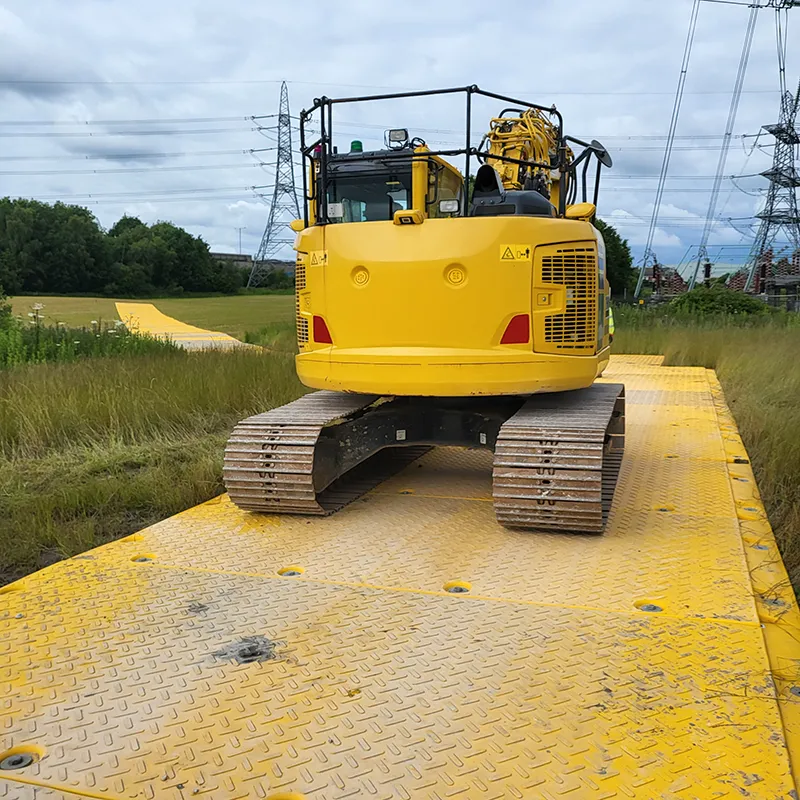
HDPE Ground Protection Mats: A Durable Solution for Construction and Heavy Equipment
Construction sites, oilfield operations, outdoor events, and infrastructure projects often face one common challenge: how to provide stable access for vehicles and equipment without causing unnecessary damage to the ground.
Soft soil, mud, grass, sand, and uneven terrain can make transportation and equipment movement difficult. Traditional access solutions may require considerable installation work and frequent replacement.
HDPE ground protection mats offer a practical alternative. Manufactured from high-density polyethylene, these reusable plastic mats create temporary access routes and working surfaces for a wide range of applications.
Peliou provides polyethylene ground protection mat solutions with customizable dimensions, colors, and configurations to meet different project requirements.
Table of Contents
- What Are HDPE Ground Protection Mats?
- Key Benefits of Plastic Ground Protection Mats
- Main Applications
- HDPE Mats vs. Traditional Ground Protection Materials
- How to Choose the Right Ground Protection Mats
- Why Consider Peliou Ground Protection Mats?
- Frequently Asked Questions
- Request a Quote from Peliou
1. What Are HDPE Ground Protection Mats?
HDPE ground protection mats are durable plastic panels designed to provide temporary roadways, access paths, and working platforms over challenging ground conditions.
HDPE stands for high-density polyethylene, a thermoplastic material widely used in industrial and outdoor applications because of its moisture resistance, chemical resistance, and practical processing characteristics.
Depending on the project, polyethylene ground protection mats can be manufactured in different sizes, thicknesses, colors, and surface patterns.

Peliou lists a standard ground protection mat size of 1220 x 2440 mm, with thickness options of 12.7 mm, 15 mm, 18 mm, and 20 mm, as well as customized options. The appropriate material and configuration should be confirmed according to the intended application.
2. Key Benefits of Plastic Ground Protection Mats
2.1 Ground and Surface Protection
Heavy vehicles and construction machinery can damage grass, soil, landscaping, and existing surfaces. Ground protection mats create a protective layer between equipment and the ground.
They are particularly useful for temporary construction access, landscaping projects, and outdoor events where minimizing surface disturbance is important.
2.2 Improved Traction and Accessibility
Textured surfaces and cleated designs can help improve traction for vehicles and equipment operating on muddy or soft terrain.
The surface design should be selected according to the expected vehicle type, operating conditions, and site safety requirements.
2.3 Moisture Resistance and Easy Cleaning
Unlike untreated timber products, polyethylene mats do not absorb water in the same way. This makes them suitable for outdoor environments where rain, mud, and moisture are common.
After use, the mats can generally be cleaned with water, helping prepare them for future projects.
2.4 Reusable and Cost-Effective
Reusable plastic ground mats can help reduce the need for disposable temporary access materials.
Their potential for repeated use makes them worth considering for contractors and rental companies that regularly work across multiple construction sites.
2.5 Flexible Installation
Ground protection mats can be arranged to create temporary walkways, equipment access routes, and working platforms.
The layout can be adjusted to accommodate different site conditions and project requirements.
3. Main Applications of HDPE Ground Protection Mats
3.1 Construction Sites
Construction projects frequently require trucks, excavators, cranes, and other heavy equipment to move across temporary access routes.
HDPE ground protection mats can provide a practical surface for temporary vehicle access while helping reduce damage to the underlying terrain.
3.2 Oilfield and Drilling Operations
Oilfield projects often take place in remote areas where access roads may be limited or ground conditions can change with the weather.
Temporary road mats can help establish access routes for service vehicles, equipment transportation, and field operations.
3.3 Landscaping and Outdoor Events
Outdoor events, festivals, exhibitions, and landscaping projects may require temporary vehicle access over lawns and landscaped areas.
Plastic ground protection mats help create temporary pathways while reducing direct contact between vehicles and sensitive surfaces.
3.4 Emergency and Infrastructure Projects
Emergency repair work and infrastructure maintenance may require rapid access to areas with unstable or difficult ground conditions.
Portable ground mats can be considered as part of a temporary access solution for maintenance teams and equipment operators.

4. HDPE Ground Protection Mats vs. Traditional Materials
Choosing the right temporary access material depends on project conditions, equipment weight, installation requirements, and expected reuse frequency.
| Comparison | HDPE Ground Mats | Traditional Plywood |
|---|---|---|
| Moisture Resistance | Good resistance to moisture | Can absorb water |
| Cleaning | Generally easy to wash | Can be harder to clean |
| Reuse Potential | Designed for repeated use | Depends on condition and exposure |
| Outdoor Applications | Suitable for many outdoor projects | May deteriorate with prolonged moisture exposure |
| Customization | Various sizes, colors, and patterns available | Cutting and customization may be more limited |
For projects requiring repeated outdoor use, plastic ground protection mats may offer operational advantages over conventional temporary materials.
5. How to Choose the Right Ground Protection Mats
Not all ground protection mats are suitable for every application. Before purchasing, consider the following factors.
5.1 Equipment Weight and Load Requirements
Consider the weight of vehicles and machinery, wheel or track contact areas, axle loads, and the supporting ground conditions.
Always request verified load information and confirm suitability with the supplier or a qualified engineer. A stated load capacity should not be assumed to apply to every installation condition.
5.2 Mat Thickness and Dimensions
Thicker mats may be appropriate for certain demanding applications, but thickness alone does not determine load capacity.
The material grade, structural design, ground conditions, and load distribution must also be considered.
5.3 Surface Pattern and Traction
Textured or cleated surfaces can help improve traction. Select a pattern that matches the expected vehicle movement and operating environment.
5.4 Material Selection
HDPE and UHMWPE are both polyethylene materials, but they have different molecular structures and performance characteristics.
HDPE is commonly selected for ground protection applications, while UHMWPE is often considered for demanding wear and sliding applications. Confirm the exact material grade with the manufacturer before ordering.
5.5 Customization Requirements
For large projects or specialized equipment, customized dimensions, thicknesses, colors, and surface patterns may improve installation efficiency.
6. Why Consider Peliou Ground Protection Mats?
Peliou New Materials Technology Co., Ltd. specializes in polyethylene engineering plastic materials and customized plastic products.
Its product range includes HDPE road mats, UHMWPE road mats, crane outrigger pads, UHMWPE sheets, conveyor components, and other industrial plastic solutions.
Peliou offers customization options for different project requirements, including:
- Customized mat dimensions and thicknesses.
- Multiple color options.
- Different surface patterns.
- OEM and ODM services.
- Customized plastic product solutions.
Whether you are sourcing temporary road mats for construction, oilfield access, or outdoor projects, discussing your actual working conditions with the manufacturer can help identify a suitable product configuration.
7. Frequently Asked Questions
Q1: What are HDPE ground protection mats used for?
HDPE ground protection mats are used to create temporary access roads, working platforms, and protective surfaces for construction sites, oilfields, landscaping projects, and outdoor events.
Q2: Are plastic ground protection mats reusable?
Yes. Polyethylene ground protection mats are designed for repeated use. Their actual service life depends on material quality, load conditions, handling, storage, and maintenance.
Q3: What sizes are available for Peliou ground protection mats?
Peliou lists a standard size of 1220 x 2440 mm for its ground protection mat product, with thickness options of 12.7 mm, 15 mm, 18 mm, and 20 mm. Customized dimensions are also available subject to confirmation.
Q4: Can HDPE ground mats be used in muddy conditions?
They can be used in many muddy and soft-ground applications. However, the correct mat design, surface traction, installation method, and ground-bearing conditions must be evaluated for each project.
Q5: Can Peliou provide customized ground protection mats?
Peliou provides customization options for dimensions, thicknesses, and colors. Contact the company with your drawings or project requirements to discuss available solutions.
8. Request a Quote from Peliou
Choosing the right ground protection mat can make a difference in site accessibility, surface protection, and project efficiency.
If you are looking for HDPE ground protection mats, temporary road mats, or customized polyethylene products, Peliou can help you explore suitable solutions for your application.
Looking for Reliable HDPE Ground Protection Mats?
Contact Peliou to discuss your project requirements, product dimensions, material options, and customization needs.
Company: Peliou New Materials Technology Co., Ltd.
Email: info@plasticsuperior.com
Tel / WhatsApp: +86-18630195563
Website: www.peliou.com
Get in touch with Peliou today and find the right plastic ground protection solution for your next project.