
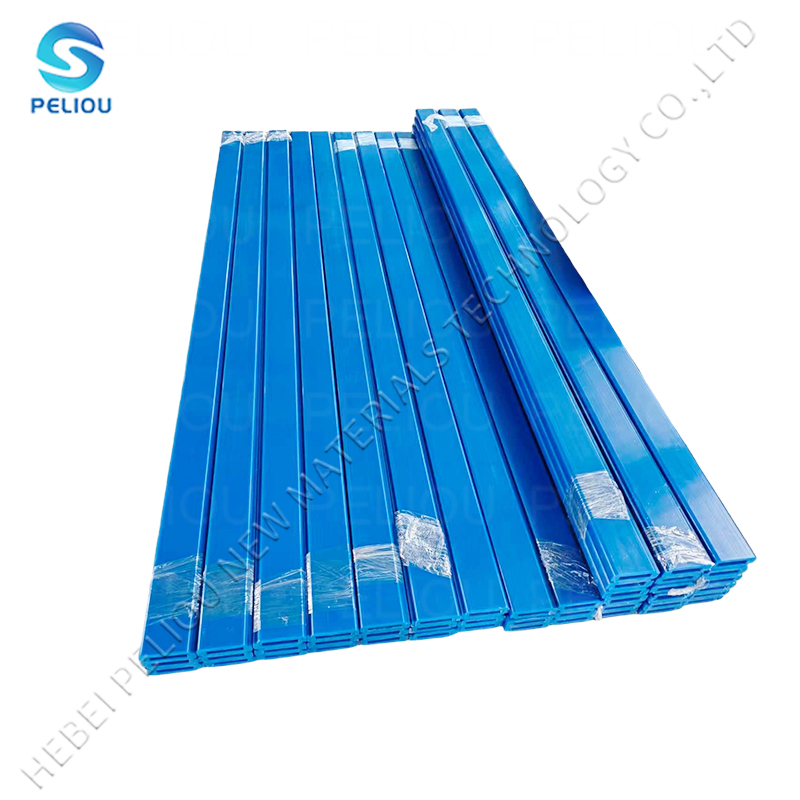
UHMWPE Conveyor Wear Strips: A Practical Solution for Industrial Conveyor Systems
In modern manufacturing facilities, conveyor systems play an essential role in transporting products, components, and raw materials. From food packaging lines to printing machinery and chemical processing equipment, conveyor components are constantly exposed to friction, movement, and mechanical wear.
Over time, continuous contact between moving components can lead to surface abrasion, increased maintenance requirements, and equipment downtime. Selecting appropriate wear-resistant materials is therefore an important consideration for conveyor system manufacturers and industrial maintenance teams.
UHMWPE conveyor wear strips are widely considered for applications involving sliding contact and abrasive wear. Made from ultra-high molecular weight polyethylene, these engineering plastic components offer low friction characteristics, good abrasion resistance, and moisture resistance.
Peliou provides customized UHMWPE wear strips and conveyor side guides for industrial machinery applications, with options for different sizes, colors, and cutting requirements.
Table of Contents
- What Are UHMWPE Conveyor Wear Strips?
- Why Choose UHMWPE for Conveyor Wear Strips?
- Key Benefits of UHMWPE Wear Strips
- Industrial Applications
- Wear Strips vs. Conveyor Guide Rails
- How to Choose the Right Conveyor Wear Strips
- Custom UHMWPE Wear Strip Solutions from Peliou
- Installation and Maintenance Considerations
- Frequently Asked Questions
- Contact Peliou
1. What Are UHMWPE Conveyor Wear Strips?
UHMWPE conveyor wear strips are engineered plastic components installed along conveyor systems to provide a protective sliding surface between moving parts.
They are commonly used in areas where conveyor chains, products, machine components, or other moving elements make repeated contact with supporting surfaces.
UHMWPE stands for Ultra High Molecular Weight Polyethylene. It is an engineering thermoplastic known for its excellent abrasion resistance, low friction characteristics, impact resistance, and chemical resistance.
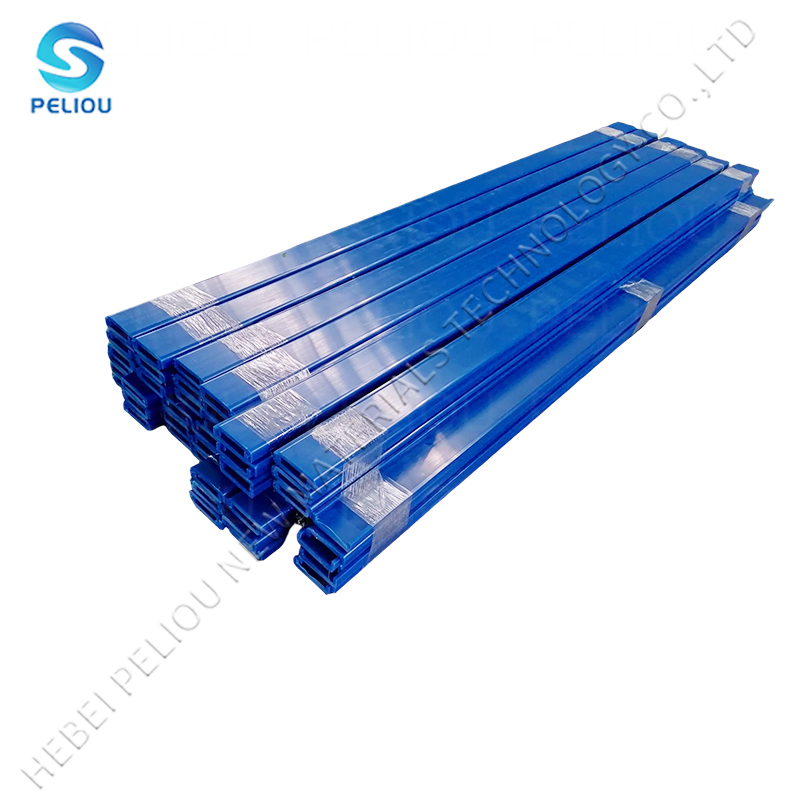
Depending on the equipment design, UHMWPE wear strips can be manufactured in different profiles, lengths, and dimensions to match the intended installation position.
Their purpose is not simply to cover a machine surface. Properly selected wear strips help create a suitable contact interface for moving conveyor components.
2. Why Choose UHMWPE for Conveyor Wear Strips?
Material selection directly affects the performance and maintenance requirements of conveyor components. UHMWPE offers several characteristics that make it suitable for many sliding and wear applications.
2.1 Excellent Abrasion Resistance
UHMWPE is recognized for its high resistance to abrasive wear. This property makes it useful in conveyor systems where components experience continuous movement and repeated surface contact.
For machinery manufacturers, selecting a suitable wear-resistant material can help reduce the frequency of component replacement, depending on the actual operating conditions.
2.2 Low Friction Characteristics
One of the important properties of UHMWPE is its naturally low coefficient of friction.
This makes the material suitable for sliding applications involving conveyor chains, moving machine parts, and guiding components.
2.3 Moisture Resistance
UHMWPE has very low water absorption. This characteristic makes it a practical material for equipment operating in environments where moisture and regular cleaning are part of daily operations.
2.4 Chemical Resistance
UHMWPE offers resistance to many chemicals, although compatibility depends on the specific chemical, concentration, temperature, and exposure duration.
For chemical processing equipment, the actual working environment should be reviewed before selecting the final material.
2.5 Impact Resistance
UHMWPE also provides good impact resistance, which is beneficial for conveyor systems exposed to repeated mechanical contact and operational impacts.
3. Key Benefits of UHMWPE Conveyor Wear Strips
3.1 Reduced Sliding Friction
Conveyor chains and moving components need suitable contact surfaces to operate smoothly.
UHMWPE wear strips provide a low-friction interface that can help reduce sliding resistance between contacting components.
3.2 Protection of Machine Components
Continuous metal-to-metal contact can contribute to wear in machinery.
Installing appropriate plastic wear strips can create a replaceable contact surface, helping protect selected machine structures and guide components.
3.3 Reduced Maintenance Requirements
Wear strips are often installed as replaceable components in industrial machinery.
When designed correctly, they can make maintenance easier by allowing worn contact surfaces to be replaced without replacing larger machine structures.
3.4 Custom Profiles for Different Equipment
Industrial conveyor systems do not all use the same guide geometry.
Custom UHMWPE wear strips can be manufactured according to drawings, dimensions, and installation requirements, helping machinery manufacturers achieve a better fit.
4. Industrial Applications of UHMWPE Conveyor Wear Strips
4.1 Food Packaging Machinery
Food packaging machinery often relies on conveyor systems to move bottles, containers, packages, and other products through different processing stages.
UHMWPE wear strips and side guides can be used as sliding and guiding components in these systems.
Peliou identifies food packaging machinery as one of the application areas for its customized UHMWPE conveyor side guides.
4.2 Printing Industry Machinery
Printing equipment may contain moving mechanisms and material handling systems that require durable sliding components.
UHMWPE wear strips can be considered for selected machine guide and contact positions where abrasion resistance and low friction are important.
4.3 Chemical Equipment
Chemical processing equipment may require engineering plastic components that can withstand contact with moisture and selected chemicals.
UHMWPE wear strips can be considered for compatible applications, subject to chemical compatibility evaluation.
4.4 Medical Machinery
Specialized machinery used in medical equipment manufacturing may also require custom plastic guiding and wear components.
UHMWPE components can be evaluated for mechanical applications where their physical properties match the equipment requirements. Material suitability and any applicable regulatory requirements must be confirmed separately.
5. UHMWPE Wear Strips vs. Conveyor Guide Rails
Although UHMWPE wear strips and conveyor guide rails are closely related, their functions can differ depending on the conveyor design.
| Comparison | UHMWPE Wear Strips | UHMWPE Guide Rails |
|---|---|---|
| Main Function | Provide a replaceable sliding or wear surface | Guide and position conveyor chains or moving components |
| Typical Installation | Along selected contact surfaces | Along conveyor sides or guiding positions |
| Design | Flat or customized profiles | Straight or curved profiles |
| Customization | Size, color and cutting options | Size, color, straight and curved configurations |
| Material | UHMWPE | UHMWPE |
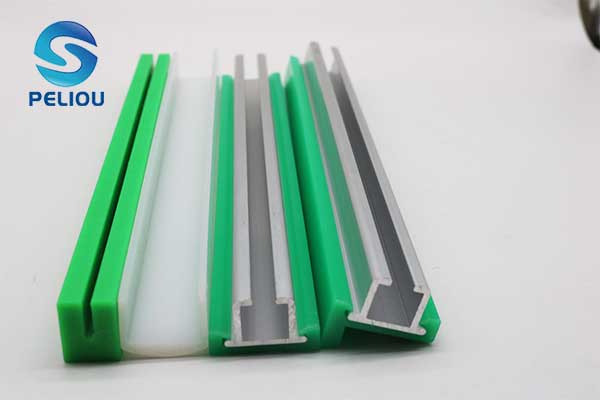
Peliou also offers UHMWPE guide rails designed to adjust the position of conveyor chains, with both straight and curved configurations available.
For related product information, visit: Peliou UHMWPE Guide Rail .
6. How to Choose the Right Conveyor Wear Strips
Selecting the correct UHMWPE conveyor wear strip requires understanding the equipment structure, operating conditions, and installation requirements.
6.1 Identify the Contact Area
Determine which parts of the conveyor system experience repeated sliding contact.
This helps establish the required wear strip shape, installation position, and contact dimensions.
6.2 Confirm the Required Dimensions
Measure the available installation space, required length, width, thickness, and any special profile features.
Accurate measurements help ensure that the customized wear strips fit the intended equipment.
6.3 Evaluate Operating Conditions
Consider operating speed, contact pressure, temperature, moisture, chemical exposure, and the materials being transported.
These factors can influence the selection of the appropriate material grade and component design.
6.4 Choose the Correct Profile
Different conveyor systems may require flat wear strips, side guides, grooved profiles, or customized shapes.
Providing technical drawings or photographs of the existing components can help manufacturers understand the required configuration.
6.5 Consider Color and Identification Requirements
UHMWPE wear strips can be produced in different colors according to customer requirements.
Color selection can help distinguish different machine components or production areas, depending on the factory's identification system.
7. Custom UHMWPE Wear Strip Solutions from Peliou
Peliou provides customized UHMWPE conveyor side guides and wear strips for industrial machinery applications.
According to its official product information, the company offers cutting options and customization for product dimensions and colors.
Its customization services can be considered for:
- Custom length, width, and thickness.
- Different UHMWPE profile shapes.
- Customized colors.
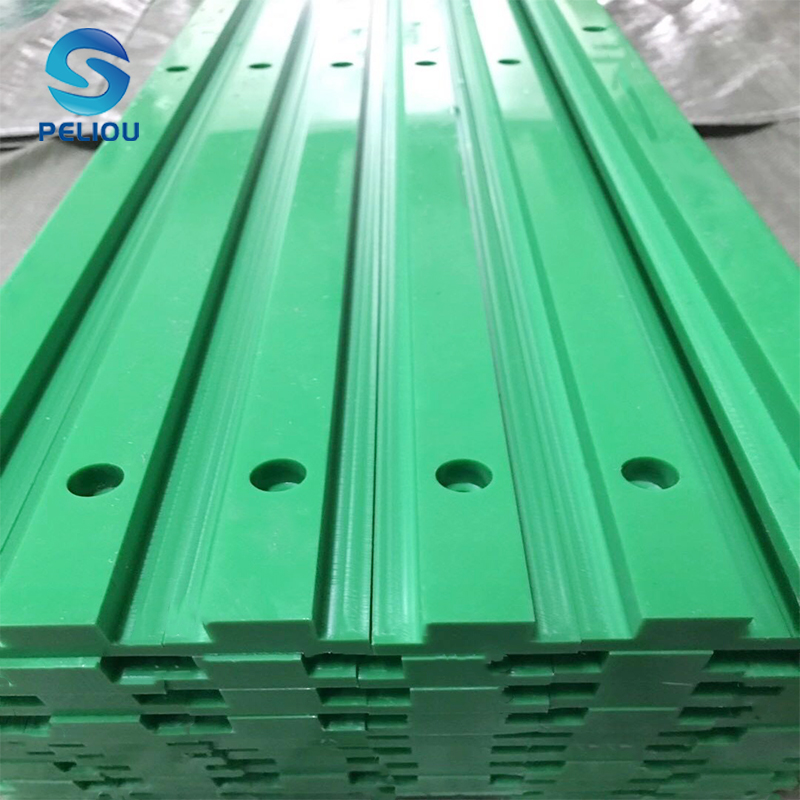
- Machined holes and other drawing-based features, subject to confirmation.
- Straight and curved conveyor guide configurations.
- OEM and ODM manufacturing requirements.
For customized projects, buyers can provide engineering drawings, sample components, dimensions, or photographs of the existing conveyor system.
Peliou can then review the requirements and discuss the appropriate manufacturing approach.
8. Installation and Maintenance Considerations
Correct installation and regular inspection are important for maintaining the performance of industrial conveyor wear strips.
8.1 Check Mounting Dimensions
Before installation, confirm that the strip dimensions match the machine's mounting positions and design drawings.
8.2 Inspect Fastening Points
Check the mounting holes, fasteners, and supporting structures to ensure that the wear strip is properly secured.
8.3 Monitor Wear During Operation
Regularly inspect the contact surface for excessive wear, deformation, cracks, or unusual friction patterns.
8.4 Replace Components When Necessary
Worn or damaged wear strips should be evaluated and replaced according to the equipment maintenance procedure.
9. Frequently Asked Questions
Q1: What are UHMWPE conveyor wear strips used for?
UHMWPE conveyor wear strips are used to provide sliding surfaces, guide moving components, and help protect machine contact areas from abrasion. They are commonly considered for industrial conveyor systems and machinery.
Q2: Why is UHMWPE suitable for conveyor wear strips?
UHMWPE offers high abrasion resistance, low friction characteristics, impact resistance, and low water absorption. These properties make it suitable for many industrial sliding and guiding applications.
Q3: Can Peliou manufacture customized UHMWPE wear strips?
Yes. Peliou lists customization options for dimensions, colors, and cutting requirements. Customers can provide drawings or specifications for review.
Q4: What is the difference between UHMWPE wear strips and guide rails?
Wear strips primarily provide replaceable sliding contact surfaces, while guide rails help control the position and movement of conveyor chains or other moving components. Some conveyor designs use both.
Q5: Are UHMWPE wear strips suitable for food packaging machinery?
Peliou lists food packaging machinery as an application for its UHMWPE conveyor side guides. However, food-contact suitability depends on the specific material grade, processing conditions, and applicable regulations. Buyers should request relevant documentation before selecting a product for direct food-contact applications.
Q6: Can UHMWPE wear strips be manufactured in curved shapes?
Peliou lists straight and curved customization for its UHMWPE guide rails. The availability of a particular curved wear strip profile should be confirmed with the manufacturer.
Q7: What information should I provide when requesting a quote?
Provide the required dimensions, material preference, color, profile drawings, intended application, and estimated order quantity. Photographs of the existing component can also help clarify the requirements.
10. Contact Peliou for Customized UHMWPE Conveyor Wear Strips
Choosing the right conveyor wear strip can help machinery manufacturers establish suitable sliding interfaces and manage component wear.
Whether you need UHMWPE conveyor side guides, custom wear strips, or straight and curved guide rails, Peliou offers customized polyethylene product solutions for industrial applications.
Looking for Custom UHMWPE Conveyor Wear Strips?
Send your technical drawings, dimensions, or application requirements to Peliou. Discuss your project with the team and explore suitable customized plastic components.
Company: Hebei Peliou New Materials Technology Co., Ltd.
Email: info@plasticsuperior.com
WhatsApp: +86 186 3019 5563
Official Website: www.peliou.com
Contact Peliou today for customized UHMWPE conveyor wear strip solutions for your industrial machinery.